
Does Ceramic Coating Prevent Scratches on Cars?
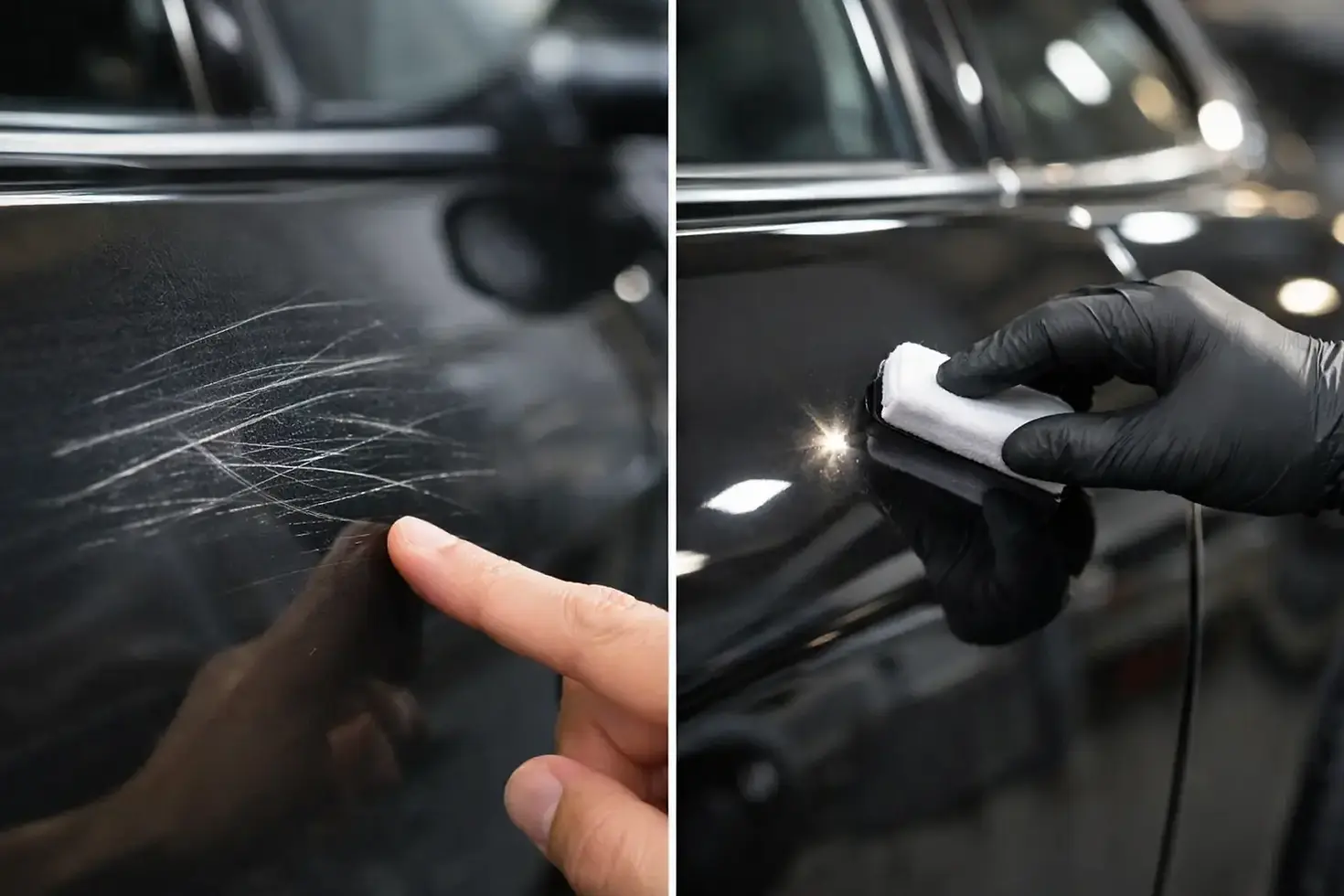
A black vehicle can look perfect in the morning and show fresh marks by the afternoon, especially after a dusty Calgary commute or a quick winter wash. So, does ceramic coating prevent scratches? Not completely. A quality ceramic coating can reduce light surface marring and make washing safer, but it is not a physical shield against every scratch, rock chip, parking-lot scuff, or scrape.
That distinction matters before you invest in paint protection. Ceramic coating is excellent at keeping a vehicle easier to clean, glossier, and better protected from contamination. For true impact protection, however, paint protection film is the stronger option.
What ceramic coating actually does
Ceramic coating is a liquid polymer applied to properly prepared paint, then cured to form a thin, durable protective layer. It bonds to the clear coat and creates a slick, water-repelling surface. Water beads up, dirt has less to cling to, and road film can be easier to remove during routine cleaning.
The coating also helps protect against common causes of paint deterioration, including UV exposure, bird droppings, tree sap, bugs, road salt, and mineral deposits. Calgary drivers see plenty of these challenges through changing seasons. A coated vehicle is not maintenance-free, but it is usually much simpler to maintain without aggressive scrubbing.
The key word is thin. Ceramic coating adds a microscopic sacrificial layer over the clear coat. It does not add enough material to absorb the force of gravel, a key, a metal zipper, or another vehicle door.
Does ceramic coating prevent scratches from daily use?
Ceramic coating can help reduce the appearance and likelihood of very light scratches - the faint swirls and haze often caused by improper washing, drying, or wiping dust from paint. Because the surface is slicker, wash mitts and drying towels glide more easily when the vehicle is cleaned correctly. Less friction means less opportunity to create minor marring.
It can also make it easier to remove contaminants before they bake onto the paint. That matters because rubbing at stuck-on grime with a dry towel is one of the quickest ways to create visible marks.
Still, the coating cannot stop scratches that reach through it. If you drag a dirty snow brush across the hood, use a rough automatic car wash, or wipe gritty road dust from dry paint, scratches may still form. The coating may take some of the initial wear, but it cannot change the force or abrasiveness of what contacts the vehicle.
Marketing terms such as “9H” can create confusion here. This rating generally refers to pencil hardness under controlled testing, not immunity from real-world damage. A sharp object, sand, gravel, or dirty wash brush can still mark a ceramic-coated vehicle.
What it can help with
A professionally applied coating is useful for reducing light wash-induced marring, resisting staining, limiting oxidation, and making regular maintenance more efficient. It also gives paint a richer gloss that many owners notice immediately, particularly on dark colours and well-corrected finishes.
What it cannot stop
Ceramic coating will not reliably prevent rock chips, deep scratches, door dings, bumper scuffs, vandalism, curb rash, or damage from a collision. It also will not repair existing scratches. If the paint already has swirl marks, oxidation, or etched water spots, paint correction should be considered before coating so the finish is protected at its best.
Why Calgary conditions change the answer
In Calgary, paint protection is not only about keeping a vehicle shiny. Winter gravel, sanded roads, temperature swings, slush, salt residue, and frequent roadside construction all put paint under pressure. Vehicles driven daily on Deerfoot Trail, Stoney Trail, or gravel-adjacent routes are exposed to a steady stream of small impacts that ceramic coating was never designed to absorb.
Winter washing can be just as hard on a finish. Grit collects around lower doors, wheel arches, rocker panels, and rear bumpers. If that grit is wiped instead of thoroughly rinsed away, it acts like sandpaper between the towel and paint. Ceramic coating helps dirt release more easily, but good washing technique remains essential.
For vehicles that spend most of their time in a garage and are carefully hand-washed, ceramic coating may be the right primary protection choice. For a daily-driven SUV, truck, performance vehicle, or newer luxury car that faces regular highway kilometres, coating alone may not match the owner’s expectations for scratch prevention.
Ceramic coating vs. PPF for scratch protection
Paint protection film, often called PPF or clear bra, is a thicker urethane film installed over painted panels. Unlike ceramic coating, it is designed to absorb and disperse the force of road debris and light physical contact. Quality self-healing PPF can also reduce the visibility of fine surface marks when exposed to heat.
That makes PPF the better solution for high-impact areas: the front bumper, hood, fenders, mirrors, rocker panels, door edges, and behind the wheels. Full-front coverage is a practical choice for many Calgary drivers because it protects the panels that receive the most highway debris.
Ceramic coating and PPF are not competing products in every situation. They work well together. PPF handles impact resistance, while a ceramic coating applied over exposed paint and compatible film improves water behaviour, gloss, and ease of washing. The right combination depends on how the vehicle is used, where it is parked, and how long you plan to keep it.
If your priority is lower maintenance and a deep, clean finish, ceramic coating may be enough. If your priority is avoiding stone chips and protecting a newer vehicle’s front end, add PPF. If you want both benefits, protect the vulnerable panels with film and coat the rest of the vehicle.
How to get the most from a ceramic coating
Ceramic coating performs best when the paint is prepared properly. A professional detail should start with a thorough wash and decontamination to remove embedded fallout, tar, and bonded grime. Depending on the vehicle, paint correction may follow to reduce swirl marks and restore clarity before the coating is applied.
After installation, follow the cure-time instructions. Avoid washing the vehicle or exposing it to harsh conditions too soon. Once cured, wash with pH-balanced products, use clean microfiber towels, and rinse away heavy grit before touching the paint. A touchless wash is useful for removing loose winter grime, though it will not always replace a careful hand wash.
Avoid brush-style automatic car washes if preserving the finish is a priority. Their brushes can hold dirt from previous vehicles, creating the same kind of fine swirls that owners hope ceramic coating will prevent. Also avoid dry wiping. If a panel looks dusty, rinse it first or wait until it can be washed correctly.
Set the right expectation before you protect your paint
Ceramic coating is a valuable finish-protection service, not scratch-proof armour. It makes ownership easier by improving gloss, reducing contamination buildup, and helping prevent some light wash damage. It will not make paint invincible against physical abuse or flying road debris.
For the clearest recommendation, think about your real driving routine rather than the best-case scenario. A vehicle that sees Calgary highways, winter roads, school parking lots, and frequent errands needs a different protection plan than a weekend car. Elegance Motor Calgary can bring professional detailing, ceramic coating, and PPF service to your home or workplace, making it easier to protect the vehicle you actually drive - not just the one you wish stayed in the garage.



Comments