

Vehicle Wrap Comparison: Vinyl, PPF, or Ceramic?
- STAVROS KASVIKIS
- 17 hours ago
- 6 min read
A vehicle wrap comparison is not just about picking the best-looking finish. For Calgary drivers, it is also about deciding what can stand up to gravel, road salt, winter grime, strong summer sun, tight parking lots, and the daily commute. Vinyl wrap, paint protection film, and ceramic coating can all improve the ownership experience, but they do very different jobs.
The right option depends on what matters most when you walk up to your vehicle. Do you want a new colour without repainting? Are rock chips on the hood and bumper your biggest concern? Or do you simply want paint that stays cleaner and is easier to wash? Start with that answer, then compare the materials honestly.
What a vehicle wrap comparison should answer
Many people use the word wrap to describe any film or coating applied to a vehicle. In practice, vinyl wrap, paint protection film (PPF), and ceramic coating are separate products with separate strengths. A vinyl wrap is primarily a styling product. PPF is impact-focused paint protection. Ceramic coating is a bonded protective layer that improves gloss, water behaviour, and cleaning.
There is overlap. A vinyl wrap can offer some protection from light scuffs, and a ceramic coating can help protect a vinyl finish from staining and fading. But neither should be expected to stop the type of stone impact that PPF is designed to absorb. Choosing based on the wrong expectation is how owners end up disappointed.
Vinyl wrap: best for colour and style changes
Vinyl wrap is the practical choice when the visual change is the main goal. It can transform a vehicle from gloss black to satin grey, add a matte finish, create a two-tone look, or cover a roof, chrome trim, or interior accents. Because it is removable when properly installed and removed, it can be appealing for leased vehicles or owners who want a distinct look without permanently changing the factory paint.
A quality wrap can also provide a barrier against light marks, UV exposure, and everyday surface wear. However, thin vinyl is not a substitute for PPF on areas that take repeated gravel strikes. Calgary highways, winter sanding, and construction-zone debris can cut through vinyl, especially on a low front bumper, hood edge, mirror, or rocker panel.
When vinyl makes sense
Choose vinyl when the finish is your priority and you accept that cosmetic protection is secondary. It works well for a full colour change, a business vehicle needing graphics, or a vehicle owner who wants a fresh appearance while preserving the original colour underneath. Surface preparation matters greatly. Paint should be properly cleaned and corrected where needed before vinyl is applied, since deep chips, peeling clear coat, and rough contamination can show through the film.
Vinyl also needs sensible care. Hand washing with suitable products is generally safer than aggressive brushes and harsh chemicals. If the vehicle is parked outside, a premium film and regular maintenance become even more valuable.
Paint protection film: best for stone-chip defence
PPF is transparent urethane film installed over painted panels. Its purpose is not to change the colour of your vehicle. Its purpose is to take the hit before your clear coat does. A quality film is thicker than vinyl wrap and is built for the areas Calgary drivers worry about most: the front bumper, hood, fenders, mirrors, rocker panels, door edges, and rear wheel arches.
Modern PPF can be available in gloss, matte, and specialty finishes. Many premium options have self-healing properties, meaning minor swirl marks or light scratches can become less visible with heat. This does not mean the film is indestructible. A hard impact can still damage it, and a severe collision will still require body repair. The advantage is that the film can often be replaced while the original panel paint remains protected.
PPF is usually the higher upfront investment, especially for a full vehicle installation. That cost makes the most sense for newer vehicles, luxury and performance cars, frequent highway commuters, and owners who plan to keep their vehicle for years. It can also be a smart targeted investment. You do not need to cover every panel to benefit. A front-end package often addresses the highest-risk areas without the cost of a full wrap.
Ceramic coating: best for gloss and easier maintenance
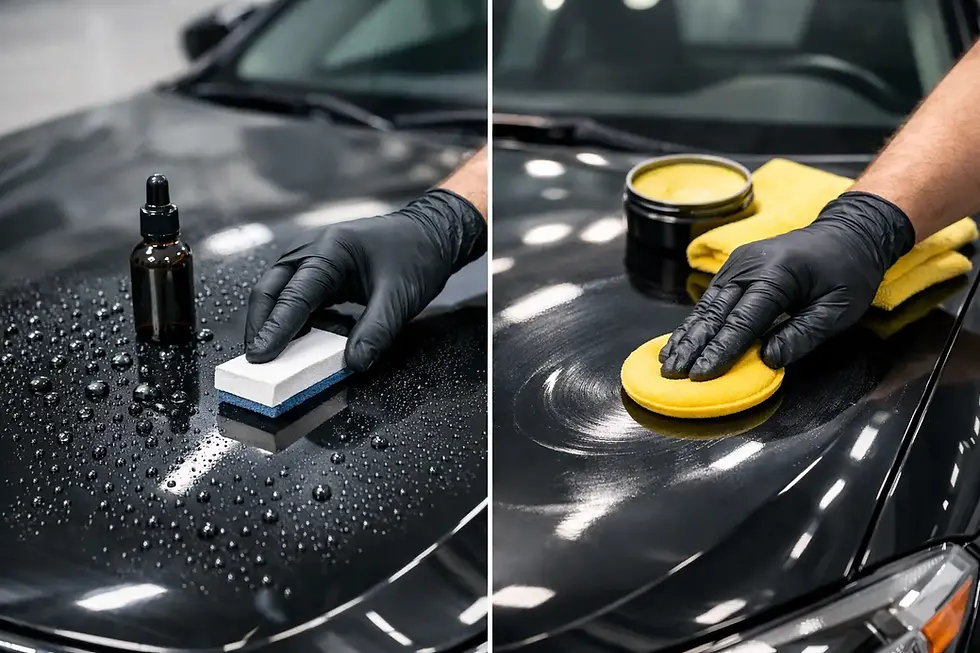
Ceramic coating is a liquid-applied protection product that chemically bonds to the vehicle's clear coat, or in some cases to PPF and vinyl. It creates a slick, glossy surface that helps water bead and makes mud, dust, bugs, and road film easier to remove during regular washing.
For a busy household or commuter, that easier maintenance is a meaningful benefit. After a wet Calgary spring drive or a slushy winter week, a coated vehicle is generally less frustrating to clean. The coating can also add UV resistance and help reduce the chance of some stains bonding directly to the paint.
What ceramic coating does not do is stop stone chips, deep scratches, or door dings. It is not a hard shell, and it should never be sold as one. If your current bumper is being peppered with gravel, PPF is the better answer. If your paint is already protected from impacts and you want stronger gloss and easier washing, ceramic coating is an excellent addition.
Vehicle wrap comparison: the practical differences
| Option | Main benefit | Best for | What it will not do | | --- | --- | --- | --- | | Vinyl wrap | Changes colour or finish | Style-focused owners, leased vehicles, graphics | Reliably prevent rock chips | | Paint protection film | Absorbs road debris and light abrasion | New vehicles, highway driving, vulnerable panels | Replace regular washing or prevent major damage | | Ceramic coating | Adds gloss and makes cleaning easier | Owners who value low-maintenance shine | Stop chips, dents, or deep scratches |
Durability varies with film or coating quality, installation, vehicle use, and maintenance. A garage-kept weekend car and an outdoor daily driver travelling Deerfoot Trail every day should not be expected to age the same way. Be cautious with anyone promising a single lifespan without first asking how and where you drive.
The strongest option is often a combination
You do not always have to choose one product. For many owners, the most balanced approach is PPF on high-impact areas, followed by ceramic coating over the protected panels and remaining paint. This combination gives the front end real physical protection while making the entire vehicle easier to maintain.
A vinyl wrap can also be protected with ceramic coating. That is useful for a satin, matte, or gloss colour change that needs help resisting road film and everyday staining. The coating must be suitable for the wrap finish, and the installer should follow the film manufacturer's curing and care requirements.
A full PPF installation plus ceramic coating is the premium route for a vehicle with high replacement cost, delicate paint, or strong resale-value goals. It is not automatically necessary for every vehicle. An older commuter with existing paint wear may be better served by a detailed clean, paint enhancement where appropriate, and protection focused only on the panels that still matter most to the owner.
How to choose for your vehicle
Think about the vehicle's role before looking at product names. If it is a family SUV that sees school runs, parking lots, and winter roads, front-end PPF and an easy-clean coating may be more useful than a full colour wrap. If it is a leased sedan you want to personalize for a few years, vinyl may be the better value. If it is a performance car that spends time on open highways, protecting the bumper, hood, mirrors, and rocker panels is usually a priority.
Also consider your tolerance for maintenance. No film or coating makes a vehicle maintenance-free. Road salt should still be removed promptly, bird droppings should not sit on the surface, and winter washing remains essential. Protection makes proper care easier and helps preserve the finish between appointments.
Before installation, ask what preparation is included, which panels are covered, how edges and sensors are handled, and what aftercare is recommended. A good recommendation should fit your actual driving habits, not simply push the most expensive package.
For Calgary owners who want professional input without giving up a day at a shop, Elegance Motor Calgary can help assess the condition of your paint and recommend practical PPF or ceramic-coating options around your schedule. The goal is not to add protection you will never use. It is to make the vehicle easier to own and keep looking its best.
The best choice is the one that matches the damage you are trying to prevent, the look you want, and the time you have for maintenance. Protect the panels that face the hardest miles, then choose a finish you will still enjoy seeing every morning.


Comments