
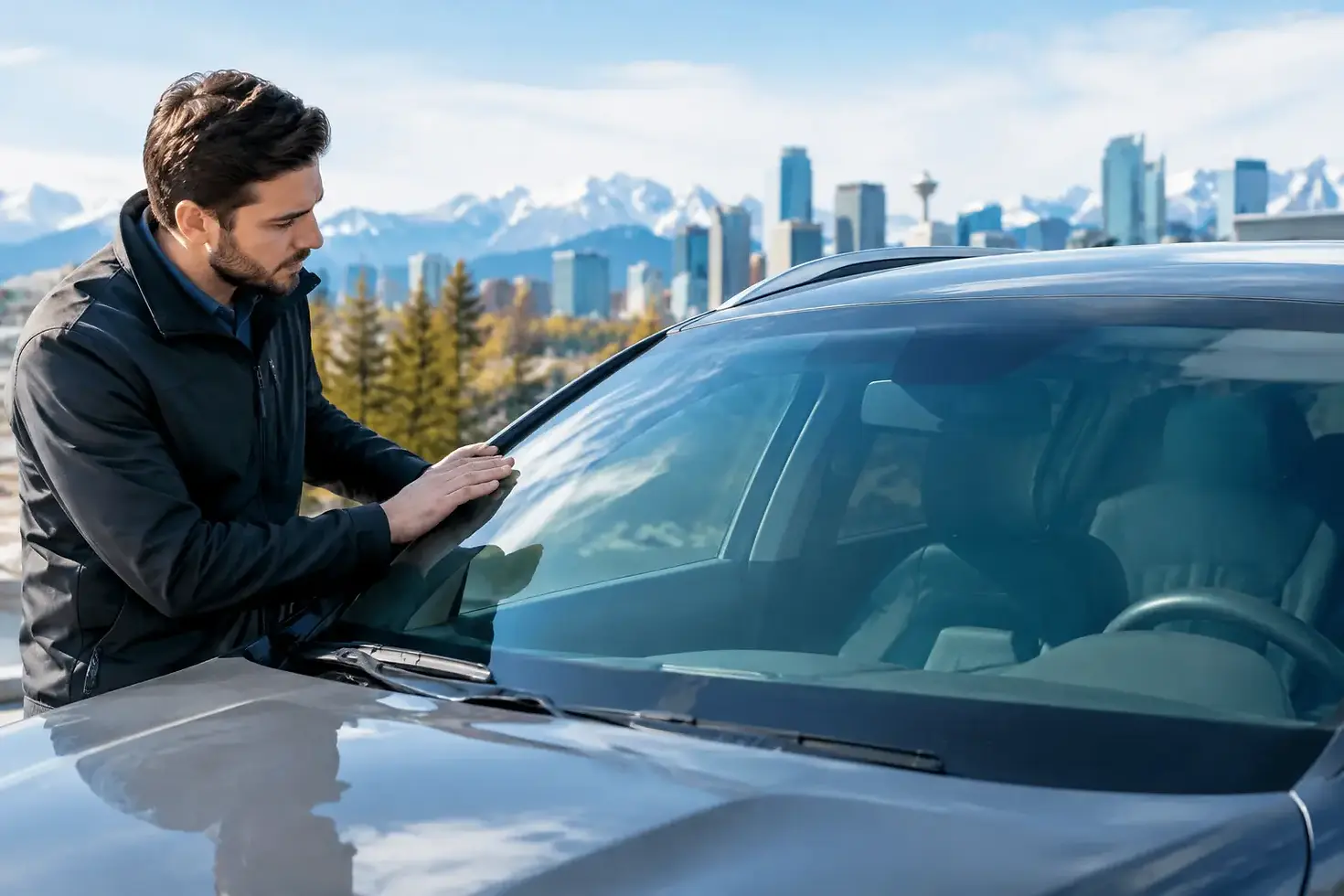
Windshield Film Performance Review for Calgary Drivers
A fresh windshield can become a road-hazard magnet in Calgary. Gravel, winter sand, sudden temperature swings, highway commuting, and bright low-angle sun all take a toll. This windshield film performance review looks at what clear windshield protection film can realistically do, where it falls short, and how to decide whether it makes sense for your vehicle.
Unlike window tint, windshield film is generally chosen for impact resistance and surface protection rather than a darker appearance. The quality of the film, the preparation of the glass, and the installation conditions all affect the final result. For drivers who want to protect a newer vehicle, reduce the chance of a costly replacement, or spend long hours on Deerfoot and Stoney Trail, those details matter.
What windshield film is designed to protect against
Clear windshield protection film is a transparent layer applied to the outside of the windshield. Its main job is to absorb the first impact from small stones, sand, road debris, and other everyday hazards before they strike the glass directly. It is not a guarantee against cracking, especially from a large rock or a sharp, high-speed impact. Think of it as a sacrificial layer that can reduce damage from the smaller hits that slowly wear down a windshield.
That protection is particularly relevant after Calgary’s winter road treatment season. Fine grit can create tiny surface marks over time, while larger stones can leave chips that spread when the temperature changes quickly. Film cannot stop every chip, but it can lower the frequency and severity of many light impacts.
The practical value depends on how and where you drive. A vehicle used mostly for short neighbourhood trips may see less benefit than a daily commuter, a rideshare vehicle, a truck that regularly travels outside the city, or a performance car with an expensive windshield and advanced driver-assistance sensors.
Windshield film performance review: the real-world results
The strongest performance benefit is chip resistance. A quality film gives loose gravel and smaller debris another surface to strike before reaching the glass. On a highway-heavy commute, that added buffer can be meaningful. It may help preserve a cleaner, clearer windshield surface for longer, particularly on newer vehicles where owners want to avoid early glass damage.
Heat and UV reduction can also be part of the package, depending on the film selected. A clear protective film may filter some UV exposure and reduce infrared heat, but expectations should stay realistic. It will not make a parked vehicle feel like it has dark window tint, and a clear film should not dramatically change the cabin’s brightness. Its primary role remains protection and optical clarity.
Glare performance is more nuanced. A properly installed clear film should not add obvious glare in normal daytime driving. However, every layer on a windshield has the potential to interact with headlights, streetlights, rain, wipers, and nighttime reflections. Premium films with good optical clarity reduce this risk, but the final result is still influenced by the condition of the glass and the care taken during installation.
For most drivers, the film should be almost invisible once installed. If you notice waviness, haze, distortion, trapped debris, lifting at the edges, or distracting reflections after the curing period, that is not a result to ignore. Visibility is too important to settle for a poor installation.
The trade-off: wipers and surface wear
Windshield film is exposed to constant friction from wiper blades. That is the trade-off. While the film protects the glass, it becomes the surface that receives scratches, wiper wear, washer-fluid residue, and contamination. Old or dirty wiper blades can mark the film faster than they would bare glass.
For the best performance, replace worn blades promptly, keep the windshield clean, and avoid running dry wipers across a dusty surface. In Calgary, this matters after a dusty spring day or during winter when salt and road grit collect on the glass. Good maintenance protects both visibility and the lifespan of the film.
Some drivers also find that water behaviour changes after installation. Depending on the film and any top coating used, rain may bead and move off the surface more easily. This can improve wet-weather visibility, but it does not replace functioning wipers or safe driving habits. Hydrophobic performance can fade over time and may require appropriate maintenance products.
Optical clarity is the deciding factor
A windshield is not like a side window. You look through it continuously, often at high speed, in changing light, rain, snow, and darkness. That makes optical clarity more important than any marketing claim about protection.
The best windshield films are made to remain clear without creating noticeable distortion. Still, even excellent material can perform poorly if applied over contaminated, scratched, or damaged glass. Existing stone chips, deep wiper marks, and etched mineral deposits may remain visible under the film. In some cases, the film can make those imperfections more noticeable from certain angles.
Before proceeding, the windshield should be assessed honestly. A light surface mark may be acceptable. A crack, active chip, or serious pitting issue usually calls for glass repair or replacement first. Installing film over damaged glass is not a shortcut to restore clarity.
Night driving deserves special attention. Drivers who frequently travel on rural roads or work late should ask about expected headlight glare and whether the film has been tested for optical performance. A clear daytime result is only half the review. The right question is whether you can comfortably drive with oncoming headlights, wet pavement, and low visibility conditions.
Installation conditions matter as much as the film
Windshield film is a precision service. The glass must be thoroughly cleaned, the film must be aligned properly, and the installer needs to control moisture, dust, and edges. A rushed job can leave visible debris, inconsistent adhesion, or premature lifting.
Mobile service is convenient, but windshield film installation needs the right environment. If weather, wind, extreme cold, or airborne dust will compromise the work, rescheduling or using a protected setup is the better choice. A professional installer should prioritize the finish over forcing an appointment in unsuitable conditions.
At Elegance Motor Calgary, the goal is to make vehicle protection convenient without treating convenience as a reason to cut corners. For any film service, a clear pre-installation inspection and practical aftercare guidance are part of getting a result you can rely on.
Curing time also matters. The film may show a small amount of moisture or mild haziness immediately after installation, depending on conditions. This should improve as it cures. Follow the installer’s instructions on when to wash the vehicle, use wipers, or apply chemicals to the windshield. Trying to speed up the process can create avoidable issues.
Is windshield film worth it for your vehicle?
Windshield protection film is often worth considering when windshield replacement is expensive, your vehicle sees frequent highway miles, or you want to preserve a recently replaced windshield. It can be especially practical for luxury vehicles and newer models with cameras, sensors, calibration requirements, and specialized glass. In those cases, a replacement can involve more than simply changing a pane of glass.
It may be less compelling for an older vehicle with heavily pitted glass that is already nearing replacement. The money may be better spent on new glass first. It is also not the right choice for someone expecting permanent, zero-maintenance protection. Film has a service life and may eventually need replacement after years of wiper wear and road exposure.
Legal requirements should also be checked before selecting any product that changes the windshield’s appearance or light transmission. Clear protection film and windshield tint are not the same thing. If you are considering a tinted or reflective windshield product, confirm current Alberta rules and choose safety and visibility first.
A practical way to make the decision
Start with your driving pattern, not just the vehicle’s value. If you routinely drive highways, travel out of town, follow construction traffic, or deal with constant road grit, the protection case is stronger. Then look at the windshield itself. New, clean glass gives film the best chance to perform well and remain visually discreet.
Finally, weigh the cost against the inconvenience of a chip, crack, glass replacement, insurance claim, and possible sensor calibration. The right windshield film should make ownership easier, not create another surface you have to worry about. Choose clear material, careful installation, and realistic expectations, and you can add a useful layer of protection to one of the most exposed parts of your vehicle.


Comments